Building your dream into reality.
Hand Made EnterprisesWhat goes into covered bridges
A covered bridge is a timber span and a small building in one. The abutments at each end carry everything, so they get set on solid footings above the high-water line, not on the creek bank as it looks in August.
The span is framed with beams or trusses sized for its length and the load it will carry, whether that is people, a garden cart or a mower. The roof protects that framing from rain, which is why covered bridges last.
The span is framed with beams or trusses sized for its length and the load it will carry, whether that is people, a garden cart or a mower.
Siding, windows and the roof are detailed to match the property. A bridge over a creek can trigger floodplain review, and we check that before design rather than finding out after the footings are poured.
Access for the build is part of the plan. Getting timber, concrete and equipment to a creek or ravine without tearing up the yard takes a route and sometimes a temporary crossing, and we work that out during the walkthrough.
Covered bridges are usually built as a feature as much as a crossing, so the details matter: the shape of the portal openings, the roof pitch, the siding, the windows along the sides. We draw those to suit the house and the setting before any timber is cut.
A common call is from someone who had work done before and wants it done right this time. Leaking showers, sagging decks and roofs that failed early are all repairable, and finding out why the first attempt failed is part of fixing it.
Some decisions are easy to change later and some are not. Paint colors, light fixtures and hardware can be swapped. Window locations, roof lines, drain positions and foundation size cannot. We spend the most time on the second list.
Windows and doors are where houses leak most often, and the fix is rarely the window itself. Correct flashing, sill pans and sealing at installation keep water and air out. We pay as much attention to that detail as to the unit we install.
If that sounds like the way you would want the work done, the next step is a conversation and a walkthrough. We will look at what is there, talk through what you are trying to get to, and tell you honestly whether we are the right company for it.
There is no cost to that conversation and no obligation after it. We would rather spend an hour finding out a project is not a fit than take it on and do a mediocre job.
How this job runs
Walkthrough
We look at the property and the existing conditions before anything else.
Drawings
Plans and a written scope, so everyone is building the same thing.
Build
Our crew runs the work, with Samuel on site through it.
Walk it together
We close the job by walking it with you, not by sending a final bill.
What actually decides the outcome
A bridge is only as good as the ground at each end. Abutments go on solid footings set back from the bank, above the line the water reaches in a wet spring.
Span sets the structure. The longer the crossing and the heavier the load, the deeper the beams or trusses, and past a certain length the design needs an engineer.
Wood that crosses water stays damp longer than wood on a deck. We choose materials and fasteners for that exposure and leave room for water to drain off the walking surface.
Railings get built as structure, not decoration, because people lean on them. Height, post spacing and fastening are planned with the frame.
Truth, trust and transparency. That is the standard, and it shows up in the schedule.Samuel Hand
Related work
Open bridges for creeks and gardens
Residential Bridges
Uncovered footbridges and cart bridges sized for the span and the load, set on footings that stay put through flood and frost.
Read more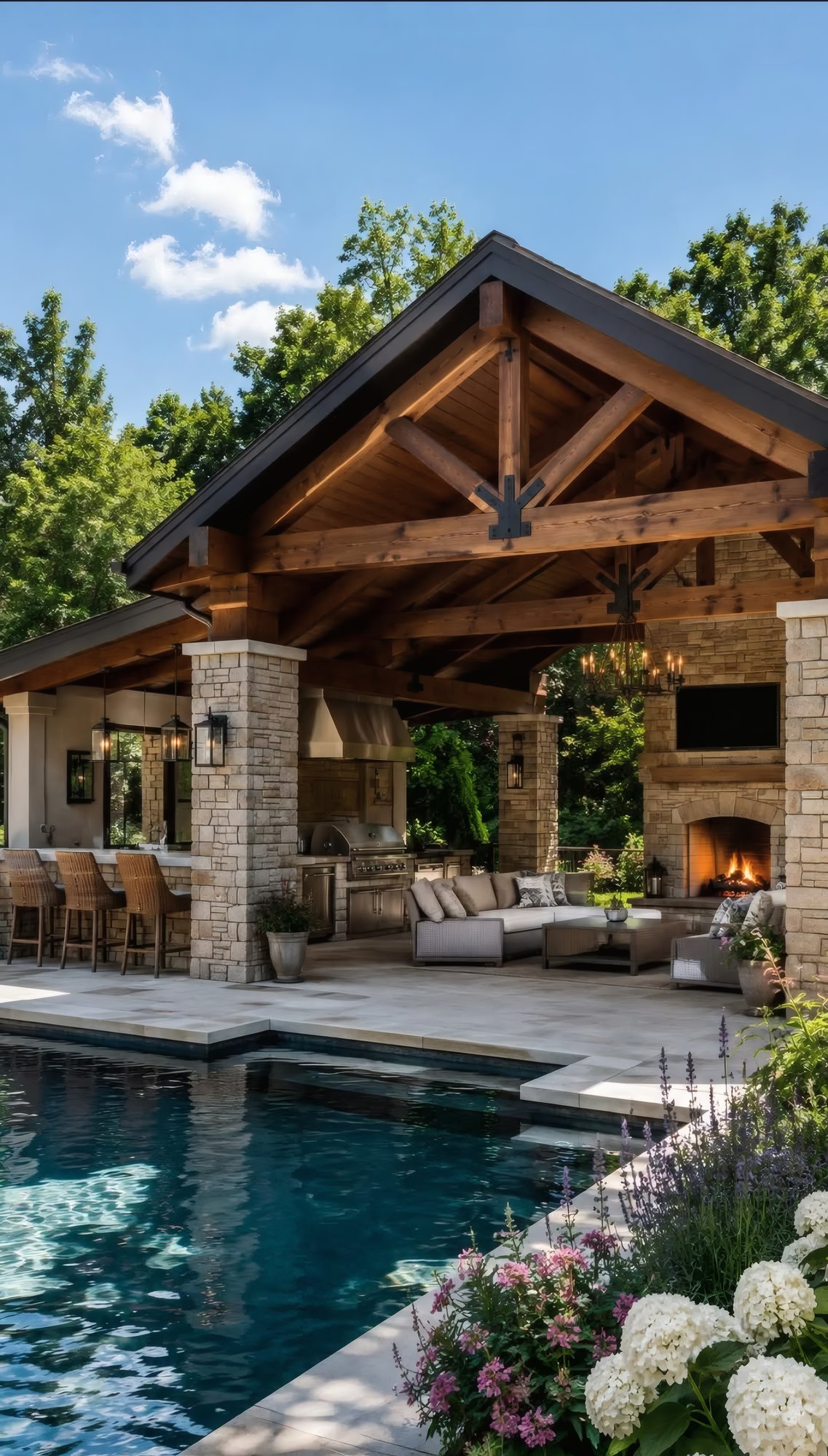
Cedar Pavilions
Cedar pavilions with a real roof
Free-standing cedar pavilions on proper footings, with a roof that sheds rain and joinery that stays tight.
Read more
Excavation Services
Digging, grading and lot clearing
Site prep, foundation excavation and lot clearing with our own equipment.
Read moreWhat we put in writing
The metal roofing we install is warranted for forty years; the dimensional shingles for thirty. Those warranties assume correct installation, which is the part we control.
Workmanship coverage comes from us directly. If it is our error, we fix it, and we keep our workload at a level where that is realistic.
Workmanship coverage comes from us directly.
We cover Montgomery, Greene, Warren, Butler, Preble and Miami counties. That is as far as we go, because past it we would be a contractor with a long commute.
Practically that covers Dayton, Kettering, Centerville, Beavercreek, Springboro, Lebanon, Mason, Hamilton, Fairfield, West Chester, Troy, Piqua, Eaton and the towns between them. Near the edge of that, call and ask.
Covered Bridges questions
Do I need a permit for a bridge on my property?
It depends on the location. Bridges over creeks can trigger floodplain review, and we check the requirements before design.
How long can a covered bridge span?
The span is limited by the framing. Longer crossings need larger beams or trusses, and very long spans may need engineering.
Can it match my house?
Yes. Roofing, siding, trim and colors are chosen to tie the bridge to the rest of the property.
What warranty comes with a standing seam metal roof?
The standing seam metal we install carries a forty-year warranty. Dimensional shingles carry a thirty-year warranty.
Who is actually on site during my build?
Our own crew handles the core work. Samuel is on site through the build, not just at the start and the end.
How do you handle changes once we have started?
Changes get written down, priced and approved before they happen. Nothing gets built off a hallway conversation.
Can you remodel an older home, or only build new?
Both. A good share of our work is remodeling houses that were built well and are worth keeping.
Do you give a written scope before work starts?
Always. It states what is included, what is excluded, what we expect to find once things are opened up, and how a change gets priced and approved. A one-page quote is how disputes start.
Who pulls the permits?
We do, and we deal with inspection scheduling as part of the job. You are not calling a building department.
What happens if you find something unexpected?
We stop, document it, price the options and talk to you before proceeding. On older houses that is a normal part of the process, not an emergency.
Ready to talk about your project?
We build across Montgomery, Greene, Warren, Butler, Preble and Miami counties.