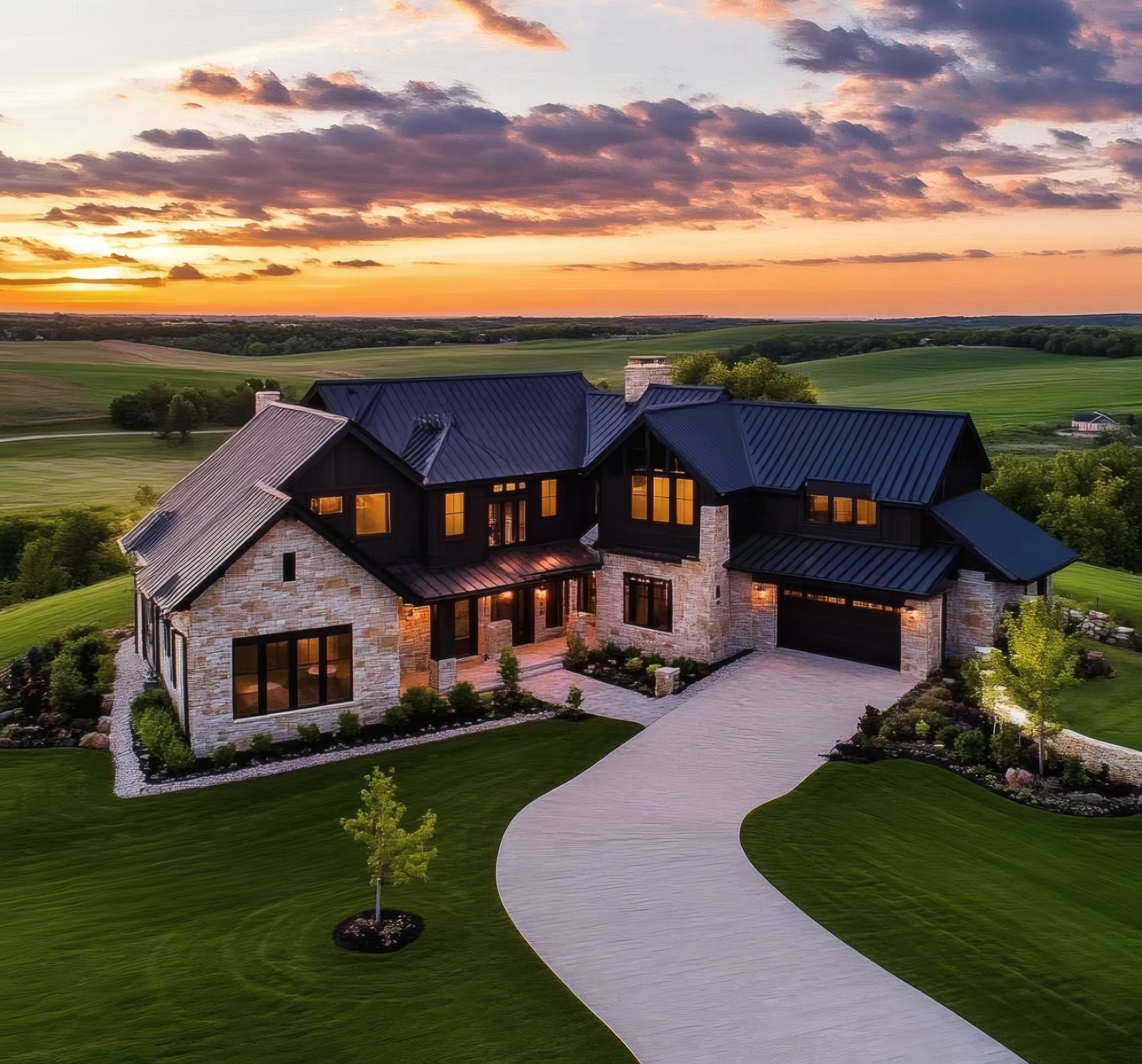
What Dayton weather does to a roof
A roof here goes through a lot in a year. Summer heat and humidity work on it, then winter brings hard freezes, snow that melts and refreezes, and storms that push rain sideways under anything that overlaps loosely. Each of those finds the weak places in a shingle roof first: lifted tabs, nail holes, a flashing that was caulked where it should have been lapped.
Ice at the eaves is the one most owners have seen. Heat from the house melts snow on the upper roof, the water runs down to the cold overhang and freezes there, and the next melt backs up behind that ridge of ice. On a lapped roof, the trapped water works its way up under the courses and into the house. A standing seam panel has no courses to work under. It runs in one piece from the eave to the ridge, and its seams stand up above the flat of the roof where water never sits.
Whether your house is one of the older city homes or a newer build, it faces the same weather, and the reasons for metal hold either way. Our Dayton page has more on the rest of what we build there, and you can ask us to come look at your roof.
Clips under the seam, no holes in the panel
On an exposed-fastener metal roof, screws go straight through the face of each panel, every one sealed by a rubber washer. Those washers dry out and crack in the sun, and each screw turns into a path water can follow inside.
Standing seam is built differently. Each panel is held to the roof deck by clips fastened along its edge, and the next panel’s edge locks over those clips to form the raised seam. Nothing pierces the flat of the panel. The clips also let the metal slide a little as it warms in July sun and shrinks on a January night, so the panels do not buckle or work their fasteners loose over the years.
Panels are formed to length, so a single piece runs from the eave to the ridge on most roof planes. With no horizontal joints across the field of the roof, the only seams left are the vertical ones, standing up out of the water. Wind-driven rain can push water uphill under a shingle, but it has no way over a seam that rises well above the panel and is locked shut along its whole length.
Our own crew installs the roof and Samuel is on the job through it, so the person who answers your questions has been up checking the seams himself.
From the deck up to the ridge
Look at the roof
We get on the roof and into the attic with you, note soft decking, ice damage at the eaves and every wall and chimney the panels will meet, then talk through colors.
Scope and order
The scope lists the color, the gauge, the flashing at each wall and chimney, and what we expect to find under the old roof. Panels are ordered once you approve it.
Deck and dry-in
The old roof comes off a section at a time, the deck is repaired and fastened, and ice and water shield and underlayment go down so no part of the house sits open to weather.
Panels and walk
Panels go on from eave to ridge, the flashing and ridge cap close it up, and we walk the finished roof and the yard with you before we call it done.
The layers under the panels
A metal roof stays watertight because of what sits beneath it. We start at the deck, replacing any boards or sheathing that have gone soft, and fasten it down so the clips have something solid to hold. On a new house the deck is new. On an existing house, it is the first thing we inspect once the old roof is off.
Ice and water shield goes on at the eaves, where ice backs up, and down every valley, where two roof planes pour their water into one channel. It is a self-adhering membrane that seals itself around the fasteners driven through it. The rest of the deck gets a synthetic underlayment, lapped so water on it always runs downhill over the course below.
Most of what keeps a metal roof dry is in place before the first panel goes up.
Flashing is where the roof meets something that is not roof. At a sidewall, the panel edge turns up against the wall and a flashing covers it, tucked behind the siding so water lands on the outside. At a chimney, the flashing is made in pieces that wrap the masonry, and a counterflashing set into a mortar joint laps over them, so the chimney and the roof can each move without opening a gap. Valleys get a formed metal channel under the panel ends, and every vent and pipe gets the boot made for it.
Color, gauge and the warranty
Standing seam comes in a wide range of colors, and on a house the choice usually follows the siding and the trim. Dark roofs sit well over white board and batten or stone, and lighter colors stay cooler under summer sun. We bring samples to the house, because a color chip looks different indoors than it does on a roof under an Ohio sky.
Gauge is the thickness of the steel. A heavier gauge resists denting from hail and fallen branches and holds a flatter face across a wide panel, and it is the one we usually recommend on a house. We go over the options with you and write the one you choose into the scope.
Our standing seam roofs carry a forty-year warranty, and it is split two ways. The manufacturer covers the material, and that coverage depends on the panels going on to its specification. We cover the installation: the clips, the seams and every piece of flashing we bent and set. When something we installed lets water through, we are the ones who return to correct it.
Our standing seam roofing page has more on panel profiles and colors, and you can see finished roofs in our gallery. If an addition is on your list as well, the home additions page for Dayton explains how the two can be built together. Call (937) 818-6177 to talk through what the work will cost, or send us a few photos of the house.
More work in Dayton
Where Dayton sits
Before you switch to standing seam
Is a metal roof louder in the rain?
Over a solid deck and underlayment, with an attic and insulation between the roof and the rooms, most owners hear little difference from shingles. The noise people remember usually comes from metal on open framing over a barn or porch, where nothing underneath softens the sound of a storm.
Will snow slide off all at once?
It can. Metal sheds snow more readily than shingles, which helps against ice at the eaves, and it also means a load can let go over a door or a walkway. We look at where snow will land and can add snow guards above entries, decks and the paths you use in winter.
Can standing seam go over my existing shingles?
We take the old roof off. Laying panels over shingles hides the deck, and the deck is where old leaks leave soft spots and rot. Tearing off lets us repair and fasten the deck, put ice and water shield where it belongs and start the panels on a flat, sound surface.
Who covers what if the roof has a problem?
The panels carry a forty-year warranty, with the manufacturer standing behind the metal as long as it was installed to their specification. The installation is ours. A leak at a seam, a clip or any flashing we put on brings our crew back to the house to fix it, without an argument first.
Does standing seam suit an older house?
Often it does. Older houses tend to carry chimneys, dormers and more than one roof line, and those are the places where careful flashing matters most. We check the framing and the deck first, since an older roof has had more years to hide damage, then plan the panel layout around every dormer and chimney.
Can part of the house have a metal roof?
Yes. A porch roof, a bay or a new addition in standing seam over a shingled main roof can look intentional when the color is chosen to work with both. The flashing where metal meets shingles takes careful detailing, and we draw that connection before any panels are ordered.
How many winters does your roof have left?
Send a few photos or ask for a visit, and we will tell you what a standing seam roof would take on your house.