November 2026
The backyards people want a pool in are usually the ones with big trees. Shade, privacy, a yard that already feels finished. Those same trees are the hardest thing on the site to build around. Roots run under the spot where the shell wants to go, the canopy drops leaves into the water every fall, and the only way into the yard is often a gap between the house and a trunk that was there long before anyone pictured an excavator. None of that rules a pool out. It means the planning starts with the trees.
Start with where the roots are
Most of a tree’s feeding roots sit in the top layer of soil and spread well past the edge of the canopy. The structural roots, the thick ones that hold the tree upright, run closer to the trunk. A pool excavation cuts through whatever lies in its footprint, and the tree does not always show the damage right away. It can look healthy the first summer and decline slowly afterward.
So before we talk about shape, we walk the yard with you and decide which trees matter most. A big oak that shades the patio is worth moving the pool for. A tree that is already in poor health may be better taken out now, before a crew and a concrete truck are working under it. Then we lay the pool where it costs the fewest important roots, even if that is not the spot you first pointed at. When a valuable tree stands close to the dig, an arborist’s opinion before the first bucket is money well spent. We would rather adjust a drawing than lose the tree that made you want the yard in the first place.
Getting the machines in without ruining the yard
A finished backyard has one weakness for a pool build, and it is access. Excavation needs a machine, the dirt has to leave, and later a concrete truck or pump needs a path to the hole. In an established yard that path usually crosses lawn, a side yard and the root zone of at least one tree.
Our own crew does the excavation, so we plan the route ourselves instead of leaving it to whoever arrives with an excavator. We lay ground protection over the path so the weight spreads out rather than pressing the soil hard. Compacted soil over roots starves them of air and water, and that damage stays invisible until the tree suffers. Where the gate is too narrow we take a fence section down and put it back afterward. Spoil gets hauled off or placed where the grading plan says it belongs, never piled against a trunk because it was handy. Sprinkler lines, buried cable and drains crossing the route get marked before anyone digs. A careful route takes longer to set up. Repairing a lawn and a tree afterward takes longer still.
Setting the shell to the yard’s own grade
Older yards are rarely flat. They fall away from the house, or toward a back fence, or both, and the trees grew up in whatever grade was there. Leveling the whole yard to suit a pool would mean cutting or filling around roots, so we set the shell to the existing grade and use the fall.
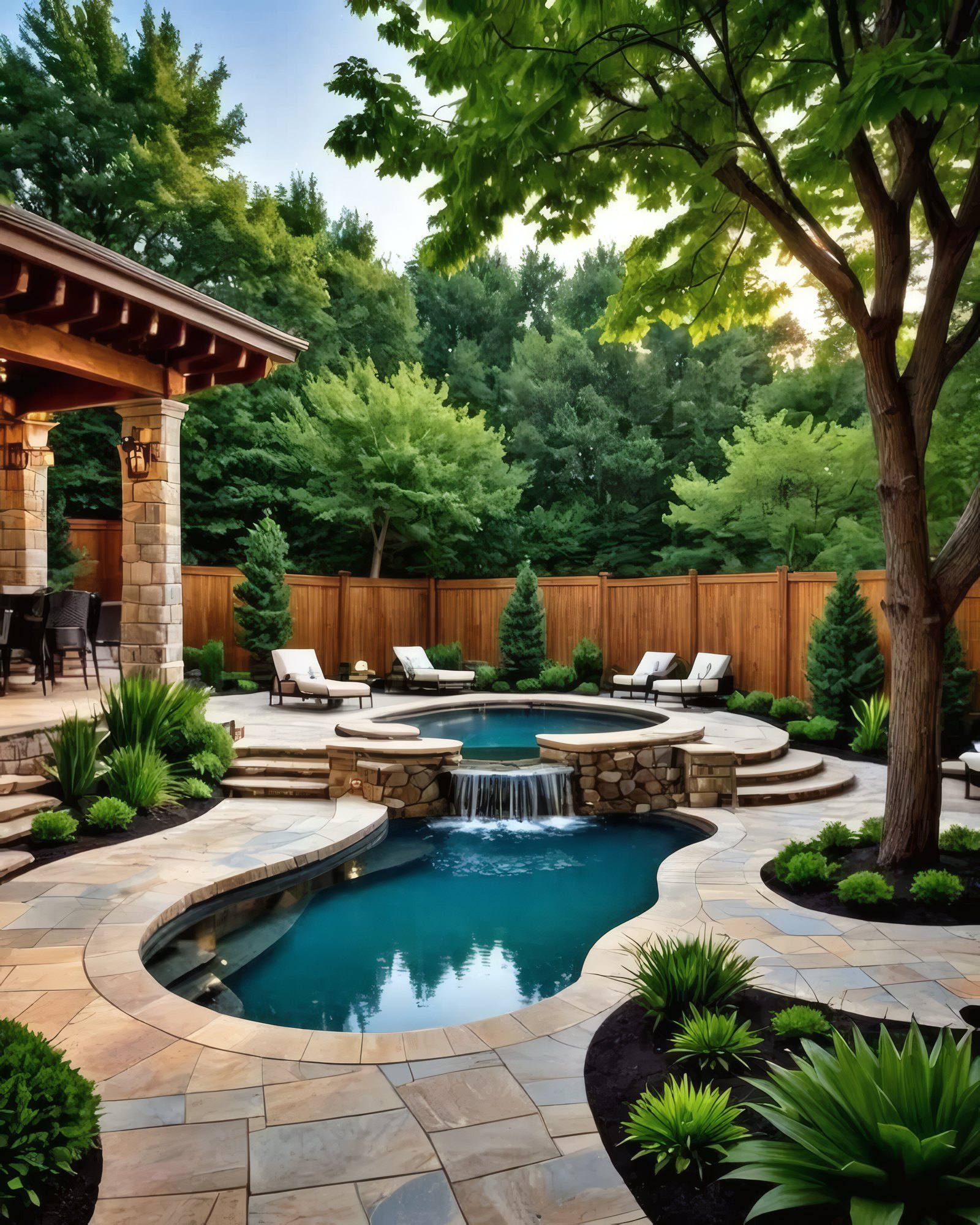
A raised spa at the high side spilling into the pool is one of the better ways to do that. The drop is already there, the wall holding the spa doubles as a seat, and the sound of the spillover covers some of the noise from next door. The deck around the pool has its own job. Every surface has to pitch so rain and splash water move away from the house and away from the pool, toward a drain or a planting bed that can take it. Pavers and stone on a well-built base handle that, as long as the base is compacted and drains. Water that sits under a deck through an Ohio winter freezes, swells and lifts the stone, and the pool edge is where you notice it first.
Leaves, shade and the water you will be skimming
A canopy over a pool is a trade. Shade keeps the deck comfortable to walk on in July and keeps the water from turning bath-warm. It also drops leaves, seeds, pollen and twigs into the water for most of the season, and some trees are a lot messier than others. It is worth knowing what is overhead before the pool goes in.
We place skimmers where the breeze tends to push debris, which in a treed yard often decides which end of the pool the equipment sits at. An automatic cleaner earns its keep here, and a good cover matters more than it would in an open yard. Fall is when a treed yard is hardest on a pool, and in Ohio fall is also when the pool gets closed. The coping and the deck have to come through hard freezes and thaws without cracking, so the stone goes down on a base that drains and the joints are detailed to let water out. Closing properly means clearing the lines of water before the first deep freeze arrives.
One plan for the pool, the patio and what comes next
Pools tend to grow. Once the water is in, people want a covered place to sit, a fence, lights along the path, sometimes a pavilion with a kitchen. Each of those needs power, sometimes gas and water, and each one is another trench through the same root zone. Digging that zone once is far kinder to the trees than digging it again and again over the years.
So we draw the whole yard as one site plan, even if you build it in stages: where the pool equipment sits, where conduit runs, where a pavilion could stand, which trees have to be protected for good. A family that builds the patio this year and the pavilion later should not have to tear up a new patio to get a gas line through. When the plan includes structures we work with licensed architects, and the drawing becomes the document everyone builds from. Laying the site out once is the backbone of how we build a pool in Centerville, whatever order the pieces arrive in.
Questions about pools in shaded yards
Will building a pool hurt the trees we have?
It can, which is why the trees shape the plan. Most of the risk comes from cutting large roots and from compacting the soil over the rest. Placing the pool away from the trees you value most, protecting the access route and keeping spoil off the root zone keeps that risk low. A tree already in decline is a different conversation, and we will tell you honestly if one should come out first.
Is the shade worth the leaves?
For most families, yes. A shaded deck stays usable on hot afternoons, and the trees are usually the reason the yard feels private. The price you pay is cleaning: skimmers placed with the wind, a good cleaner and a cover in the fall. If one tree drops far more than the others, it may be worth setting the pool away from that tree in particular.
Who deals with the permits?
We do. We pull the pool permits, book the inspections and deal with the building department so you never have to call it. If you are hoping to swim by a certain point next summer, say so at the first meeting, because the permit and inspection schedule tends to set the pace more than the digging does.
Bring us the sketch
A rough drawing of the yard with the trees marked on it is enough to start. We will walk it with you, show you where a pool fits without costing you the shade, and tell you plainly what the work will cost once the plan is real.
Our line is (937) 818-6177, or send us a note on the contact page. There is more on custom pool construction, and photos of finished work in the gallery.