What comes out with the old tub
Many older Kettering bathrooms still have the tub-shower combination they were built with: a tub against the back wall, tile or a fiberglass surround up the sides, and a curtain. It works, but it is hard to step into and hard to keep clean, and the grout has often been letting water through for a long time.
So we take the shower area down to the studs. Old tile, backer board, the tub and whatever sits under it all come out, and that is when the real condition of the room shows. Darkened studs, a soft subfloor around the drain and a rotted sill where the tub meets an outside wall are common finds. So is an earlier repair that tiled over the damage and left it in place.
All of that gets repaired before anything new goes in. Wet framing is dried out or replaced, the subfloor is made solid and flat, and the drain and valve are moved to where the new layout needs them. The written scope you sign before we start says what we expect to find once the walls are open and how a discovery gets priced and approved, so a rotted joist turns into a short written change you sign off on. Our Kettering page covers the other remodeling we do in town. If your current shower is leaking or stained, tell us what you are seeing and we will come look before you plan anything.
The layer between the tile and the framing
Tile and grout are not waterproof on their own. Grout absorbs water, and a tile wall with nothing sealed behind it stays damp inside for as long as the shower gets used. What keeps a shower dry is a continuous waterproofing layer under the tile, running from the floor up the walls and over the curb, with every seam, corner and pipe penetration sealed.
The floor is where most showers fail. Under the tile we build a pan that slopes evenly to the drain from every side, so water has no low spot to sit in. The waterproofing ties into the drain body itself. Before a single tile goes down, we plug the drain, fill the pan and watch to make sure the water level does not drop. Testing takes a little time, and it is the only way to know the pan holds.
A curbless or low-curb entry takes more planning. For water to stay in the shower without a curb to stop it, the shower floor has to sit lower than the bathroom floor, and in an older house that can mean recessing the subfloor between the joists or reworking the framing under the room. We look at what is under your bathroom before we suggest a step-free entry, and we tell you straight when the framing will not allow one.
Studs to the first shower
Open it up
We remove the old tub, surround and backer down to the framing and show you what we found before anything gets covered again.
Repair and rough in
Damaged framing and subfloor are replaced, the drain and valve move to suit the new layout, and the bench and niches are framed into the walls.
Seal and test
The pan is built to slope to the drain, the waterproofing goes on the walls and floor, and the pan has to hold standing water before tile goes down.
Tile, glass and air
Tile and grout go in on the planned layout, the glass is set, the fan is ducted outside, and we walk the finished room with you at the end.
Benches and niches framed with the walls
A bench and a niche are easy to add on a drawing and easy to get wrong in the build. Both belong in the framing. A bench gets its own framed or solid base, tied to the wall, with the seat pitched slightly forward so water runs off it. Niches are framed between the studs at a height that suits the people who will use them, with the bottom sloped toward the shower so water does not puddle on the shelf.
Then they are waterproofed along with the rest of the walls, inside corners and all. A niche is an opening cut into the wettest wall in the house, and its corners get the same sealing as the pan.
We would like you to never think about your shower pan again.
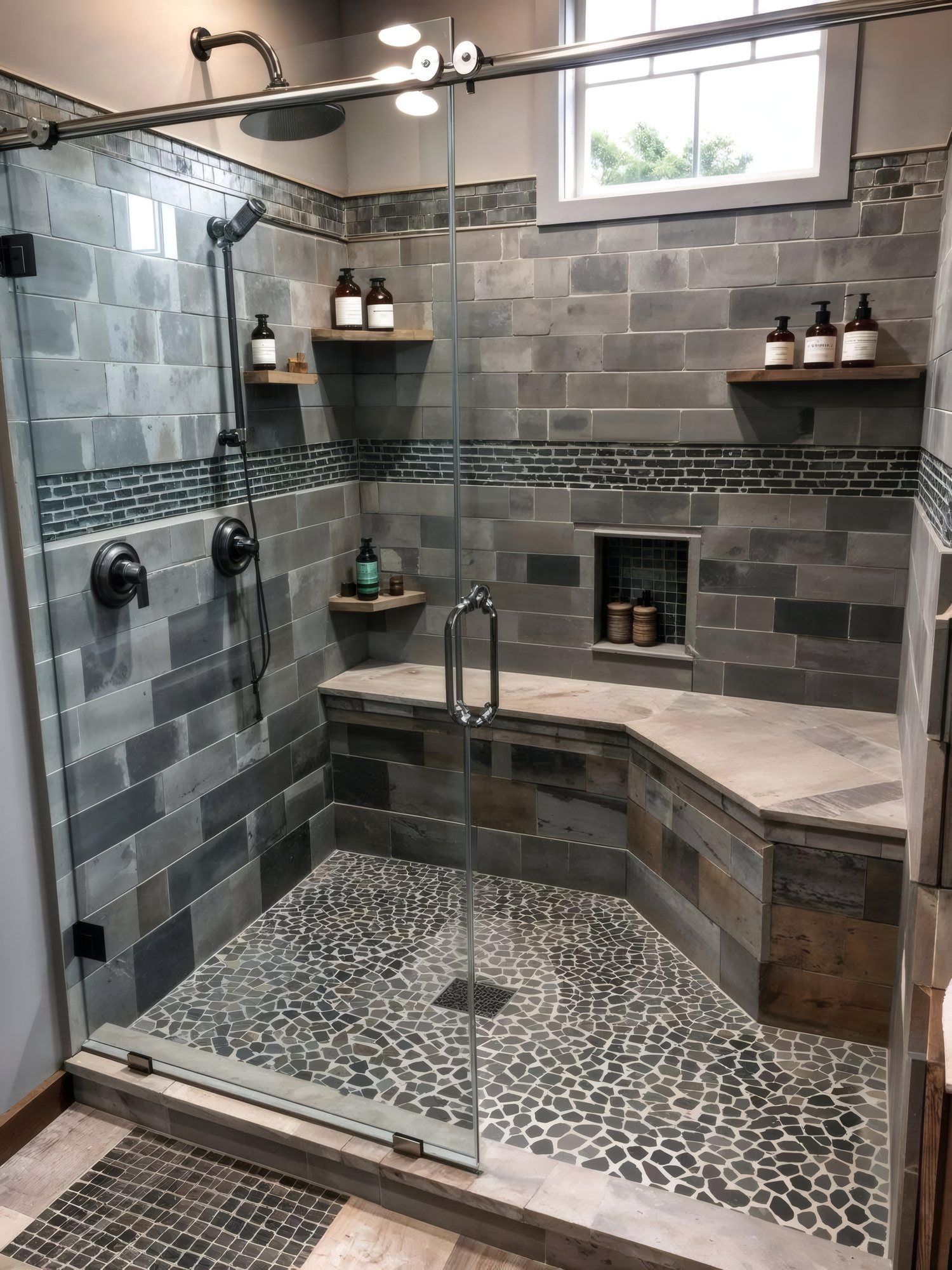
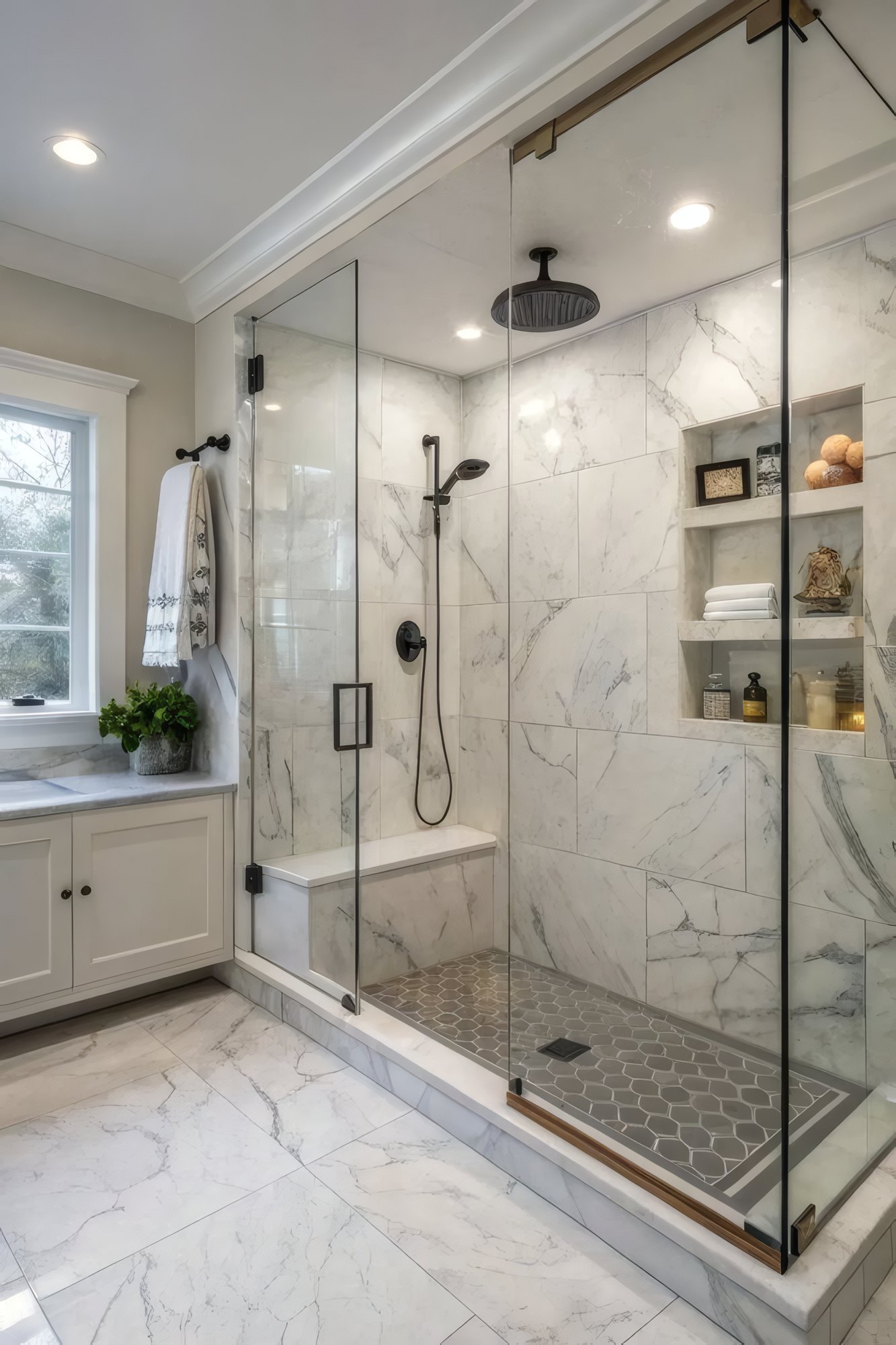
The shower at the top of this page shows how those pieces come together. Gray slate covers the walls, a glass mosaic band runs across them, a tiled bench and a niche are built in, and the floor is river pebble behind frameless glass. Another shower on this page, in white marble, takes the same parts in a different direction, with a bench, open niches, a black rain head and a gray hexagon mosaic on the floor.
Grout lines, footing and a room that breathes
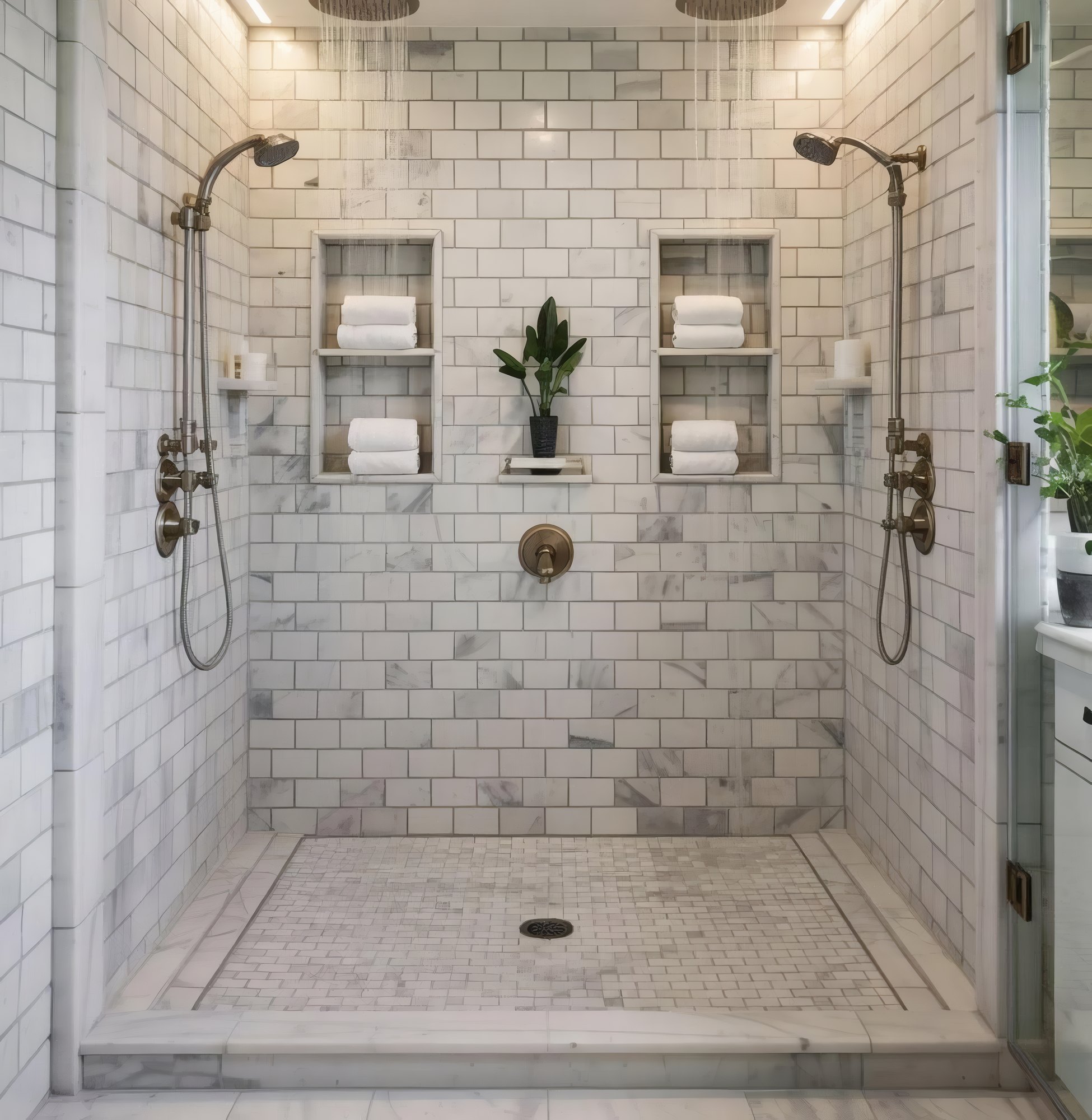
Tile layout gets worked out before the first piece is set. We center the pattern on the wall people see first, push cut pieces into the corners and away from the middle, and line grout joints up with the niche edges and the bench so the room reads as planned. The double shower on this page, in white marble subway tile with two niches and brass fixtures on each side, depends on that kind of layout to look even from one side to the other.
Floors need grip when they are wet. Small mosaics and river pebble have far more grout lines than large tile, and every grout line gives a bare foot something to catch. Small pieces also follow the slope of the pan without edges standing proud of their neighbors.
Glass and air finish the room. Frameless glass keeps the tile in view and needs a solid curb or floor to sit on, plus backing in the wall where the hinges land, which we add while the walls are open. A shower also needs a vent fan sized for the room and ducted outside, so steam leaves the house instead of settling into the ceiling. Ohio humidity gives a bathroom little help drying out on its own.
Our tile shower installation page covers this work across the region, and more finished bathrooms are in our gallery. Call (937) 818-6177 about your bathroom, or reach out here, and we will come see the shower and talk through what the work will cost.
Work like this
More work in Kettering
Where Kettering sits
Before the old tile comes down
How do I know if my shower is leaking behind the tile?
Loose or hollow-sounding tiles, grout that stays dark long after a shower, peeling paint on the other side of the wall and stains on the ceiling below are the usual signs. Any of them is worth checking early, because the framing behind the tile keeps getting wetter in the meantime.
Can you turn a tub into a walk-in shower?
Usually, yes. The tub comes out, the drain moves to where the new pan needs it, and the walls are rebuilt with waterproofing behind new tile. Whether the entry can be curbless depends on the floor framing underneath, which we check before we suggest it to you.
Why test the pan before any tile goes on?
Once tile is down, a leak in the pan is hidden under it and only shows up later as damage somewhere else. Filling the pan and watching the water level is simple, and it lets us fix a problem while the whole pan is still open and easy to reach.
Is a bench or a niche worth adding?
For most people, yes. A bench is a place to sit under the water or steady yourself, and it helps anyone who needs to sit to shower. Niches keep bottles off the floor. Both have to be framed and waterproofed while the walls are open, so they need to be decided early.
What tile works best on a shower floor?
Smaller tile, mosaics and river pebble give the most grip, because the grout lines between them give your feet something to hold. They also follow the slope to the drain more easily than large tile does. Large tile works well on the walls, where grip does not matter.
Do I need a vent fan if the bathroom has a window?
We recommend one either way. Nobody opens a window in January after a shower, and steam that stays in the room ends up in the drywall, the paint and the grout. A fan ducted outside, on a switch or a timer, clears the moisture whatever the weather is doing.
Bring us the bathroom you have now
Tell us what bothers you about it and we will draw the new shower with you.